

Cloud tagging is the unsung hero of FinOps and cloud governance. Without it, your cloud becomes a black box—costs balloon, ownership blurs, and automation stalls. Essentially, cloud tagging is the backbone of cloud governance and FinOps. This guide walks you through cloud tagging best practices that powers FinOps & Governance and why it matters, how to implement it, and how to scale it across your organization.
Here’s Why Cloud Tagging Is Your FinOps Superpower
Imagine your cloud like a cluttered desktop—virtual machines tossed here, databases scattered there, storage accounts hidden in the digital abyss. Without structure, it becomes hard to manage, track costs, or even understand who owns what. Welcome to the world of cloud tagging and labeling—the digital equivalent of sorting your files into folders, naming them consistently, and creating a system anyone can navigate. It may not be flashy, but it’s one of the most powerful habits your organization can build.
What Is Cloud Tagging?
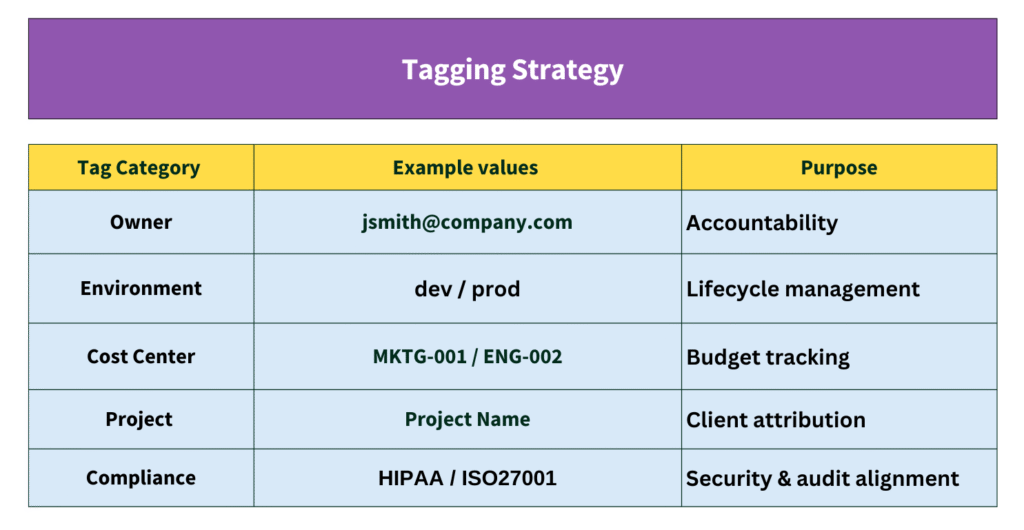
Cloud tagging is the practice of applying metadata labels to cloud resources such as virtual machines, databases, storage, and networks. These tags typically include owner, environment, cost center, project and compliance. Just as you sort files by client name or project, tags bring context, visibility, and control to your cloud.
Why Cloud Tagging Matters
Tagging is foundational to effective FinOps, governance, and security. Here’s how it drives impact:
- Cost Allocation: Break down spend by team, department, or customer
- Accountability: Know who owns each resource and enforce responsibility
- Automation: Trigger auto-scaling, alerts, and compliance workflows
- Reporting: Build dashboards aligned to business units and KPIs
- Clean-Up: Identify orphaned resources draining your budget
For more on FinOps principles, visit the FinOps Foundation
How to Tag Like a Pro
- Create a Tagging Strategy
Document your tagging framework:
- Standard categories (Owner, Environment, Cost Center)
- Naming conventions (e.g., Prod vs Production)
- Required vs optional tags
- Governance policies for tag management
Pro Tip: Align tagging fields with your financial systems and operational models.
- Apply Tags to Existing Resources
Use native cloud tools:
For multi-cloud setups, consider third-party governance platforms like CloudHealth or Turbonomic.
- Monitor & Review Regularly
Include tagging audits in your FinOps cadence:
- Are tags applied consistently?
- Are outdated values removed?
- Are automation workflows functioning?
- Adjust as You Grow
New projects = new tags. Revisit your tagging policy annually or after major reorganizations.
- Educate & Enforce
Make tagging part of
- DevOps checklists
- IaC templates
- Provisioning workflows
- Cloud onboarding training
Use CI/CD gates and policy enforcement to ensure compliance.
The Outcome: A Clean, Efficient Cloud
Tagging may look like a mundane administrative chore, but in reality, it’s one of the most powerful levers for cloud efficiency and financial clarity. A well-tagged cloud transforms chaos into control: ownership becomes unmistakable, costs are traceable down to the last byte, and operations gain the agility to scale and respond in real time. Compliance strengthens through visibility, and finance teams finally get the transparency they need to forecast, allocate, and optimize spend with confidence. Think of it as Marie Kondo-ing your cloud infrastructure—if a resource doesn’t spark visibility, tag it until it does.
Next Steps: Build a Tagging Strategy That Scales
Want help designing a tagging framework that aligns with your FinOps goals and multi-cloud architecture? Explore our Cloud Governance & FinOps Consulting Services or book a discovery call to get started.